



Gas-Insulated Ring Main Unit vs. Air-Insulated Unit: What Are the Core Differences?
Release time: 2026-08-28
Table of Contents
Medium-voltage distribution systems need reliable equipment for switching, isolation, and protection, but the right configuration depends heavily on the installation environment and available space. Gas-Insulated Ring Main Unit and air-insulated units are two approaches used in medium-voltage distribution, with differences in insulation, structure, footprint, maintenance, and application.
Understanding these differences can help project owners and electrical equipment buyers select an RMU that fits the actual requirements of their distribution system rather than choosing equipment based only on initial cost.
What Is a Ring Main Unit?
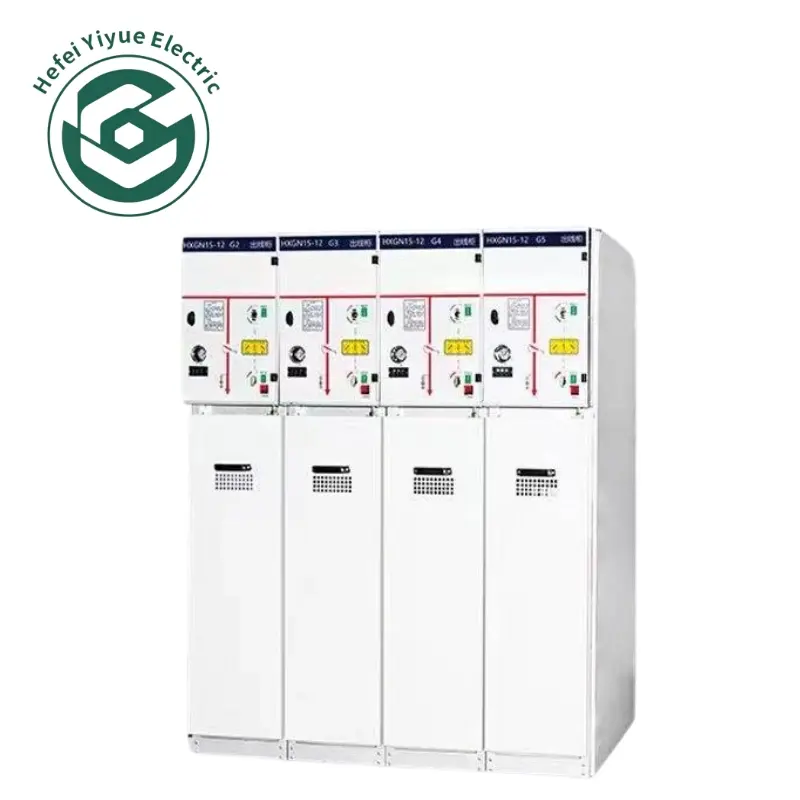
A Ring Main Unit, or RMU, is a compact medium-voltage switchgear assembly used in distribution networks. It can provide functions such as circuit switching, isolation, and protection while allowing power to be distributed through interconnected medium-voltage feeders.
RMUs are commonly used in industrial facilities, commercial buildings, residential developments, and utility distribution systems. Their compact structure makes them particularly useful where reliable medium-voltage switching equipment is required without taking up excessive installation space.
The main difference between gas-insulated and air-insulated designs comes from the insulation method used around the electrical components.
How Does a Gas-Insulated Ring Main Unit Work?
A Gas-Insulated RMU places the main switching components inside a sealed enclosure and uses insulating gas as part of the electrical insulation system.
Because the energized components are enclosed, the equipment can achieve a compact structure while limiting direct exposure to dust, humidity, and other external conditions. This makes gas-insulated designs attractive for installations where space is limited or environmental protection is important.
For example, YiYue Electric offers a Compact 24kV Gas Insulated RMU Modular SF6 Inflatable Cabinet Indoor Distribution Switchgear, designed for indoor medium-voltage distribution applications. Its compact configuration integrates RMU functions into a relatively small cabinet.
It is important to note that gas-insulated equipment should be selected according to applicable environmental, safety, and regulatory requirements, particularly when SF6 is used as the insulating medium.
How Does an Air-Insulated Ring Main Unit Work?
An Air-Insulated Ring Main Unit uses air as the primary insulation medium around its electrical components. Compared with a fully sealed gas-insulated structure, air-insulated equipment generally requires greater internal clearance between energized components.
The larger spacing can result in a larger overall footprint, although the exact dimensions depend on the voltage level, equipment configuration, insulation requirements, and enclosure design.
One advantage is that the electrical components can be more accessible for inspection and maintenance in certain configurations. Air-insulated designs can therefore be practical where sufficient installation space is available and maintenance access is a priority.
Gas-Insulated RMU vs. Air-Insulated RMU: What Are the Main Differences?
The most obvious difference is the insulation medium. Gas-insulated equipment uses an insulating gas within a sealed enclosure, while air-insulated equipment relies primarily on air and physical clearance.
This difference affects the equipment’s structure. Gas insulation allows components to be positioned more closely together, which can result in a more compact RMU. Air-insulated equipment generally needs greater electrical clearance, potentially increasing its size.
Environmental protection is another consideration. A sealed gas-insulated cabinet can limit the exposure of internal components to external dust and humidity. However, the actual protection level still depends on enclosure construction and maintenance.
Cost can also differ. Gas-insulated RMUs may involve more sophisticated sealed construction and therefore have a higher initial investment, while air-insulated solutions can be more economical for applications where space and environmental conditions are less demanding.
| Factor | Gas-Insulated RMU | Air-Insulated RMU |
| Insulation | Insulating gas | Air |
| Structure | Sealed and compact | Requires greater electrical clearance |
| Space requirement | Generally lower | Generally higher |
| Environmental exposure | Internal components are enclosed | More dependent on enclosure design |
| Maintenance | Requires attention to sealed system | Direct access can be easier in some designs |
| Initial investment | Often higher | Often more economical |
| Typical application | Compact MV distribution | Conventional MV distribution |
Which RMU Is Better for Space-Limited Projects?
When installation space is restricted, a gas-insulated design can offer an important advantage. The compact arrangement allows medium-voltage switching functions to be integrated into a smaller cabinet.
This can be valuable in urban buildings, commercial facilities, industrial plants, and other locations where expanding the electrical room is difficult.
An air-insulated RMU may be more suitable when the project has sufficient installation space and does not require the same level of compactness. The final decision should also consider access requirements, voltage rating, protection configuration, and local electrical standards.
How Does the Installation Environment Affect RMU Selection?
Environmental conditions should be evaluated before selecting either type.
High humidity, dust, pollution, and limited indoor space can influence the choice of insulation technology and enclosure design. A sealed gas-insulated RMU can help isolate internal electrical components from the surrounding environment, but this does not remove the need for appropriate enclosure protection and regular equipment inspection.
For outdoor applications, additional factors such as rain, temperature variation, salt fog, and corrosion may become important. In these situations, the complete switchgear enclosure and installation method should be evaluated rather than focusing only on the insulation medium.
What Should Buyers Consider Before Ordering an RMU?
The first step is to confirm the electrical requirements, including rated voltage, rated current, short-circuit withstand capability, feeder configuration, and protection functions.
Next, consider available installation space and maintenance access. A compact gas-insulated design may be preferable when space is restricted, while an air-insulated configuration can be considered where a larger footprint is acceptable.
The insulation medium should also be reviewed carefully. If SF6 is used, buyers should consider applicable environmental regulations and the manufacturer’s gas-management and maintenance procedures.
Finally, the RMU should be compatible with the wider power distribution system. For projects that require customized medium-voltage switchgear, factors such as cabinet configuration, protection requirements, connection arrangement, and operating conditions should be confirmed before production.
Conclusion
Both Gas-Insulated Ring Main Units and air-insulated units can serve medium-voltage distribution systems, but they address different project priorities. Gas-insulated designs generally provide a more compact and enclosed configuration, making them attractive for space-limited applications. Air-insulated units can be a practical choice where installation space is available and direct equipment access is important.
For a project requiring compact indoor medium-voltage distribution, a 24kV gas-insulated RMU such as YiYue Electric’s solution can provide an integrated option. The final selection should always be based on voltage requirements, installation conditions, maintenance strategy, applicable standards, and the overall distribution system.
FAQ
What is a Gas-Insulated Ring Main Unit?
A Gas-Insulated Ring Main Unit is a medium-voltage switchgear assembly in which key electrical components are enclosed and insulated using an insulating gas system.
What is an Air-Insulated RMU?
An Air-Insulated RMU uses air and electrical clearance as the primary insulation method around its medium-voltage components.
Is a Gas-Insulated RMU more compact?
Generally, yes. Gas insulation allows electrical components to be arranged more closely, which can reduce the overall equipment footprint.
Which is better for limited installation space?
A gas-insulated RMU is generally more suitable when compact equipment is required, although the final choice depends on the project’s voltage, protection, maintenance, and regulatory requirements.
Does YiYue Electric offer Gas-Insulated RMUs?
Yes. YiYue Electric’s Switchgear Panels range includes a compact 24kV gas-insulated RMU modular switchgear solution for indoor medium-voltage distribution