



How Do Different Prefabricated Substation Designs Address Outdoor Power Distribution Needs?
Release time: 2026-10-20
Table of Contents
Outdoor power distribution projects have different requirements for installation space, voltage configuration, environmental protection, and operating safety. A compact unit for an urban construction site may need a different layout from equipment serving a commercial district or municipal power network. Understanding these differences helps project planners identify suitable outdoor prefabricated substations for their applications.
Hefei Yiyue Electrical Equipment Trading Co., Ltd. supplies electrical equipment including transformers, box-type substations, high- and low-voltage switchgear, and power distribution cabinets. Its prefabricated substation offerings include American and European designs, with different capacities, enclosure structures, and protection configurations to meet varied project requirements.
1. American and European Designs for Different Installation Needs
The structural design of a prefabricated substation affects equipment arrangement, installation requirements, and access for maintenance. American and European configurations provide different approaches to integrating transformers and distribution equipment into outdoor installations.
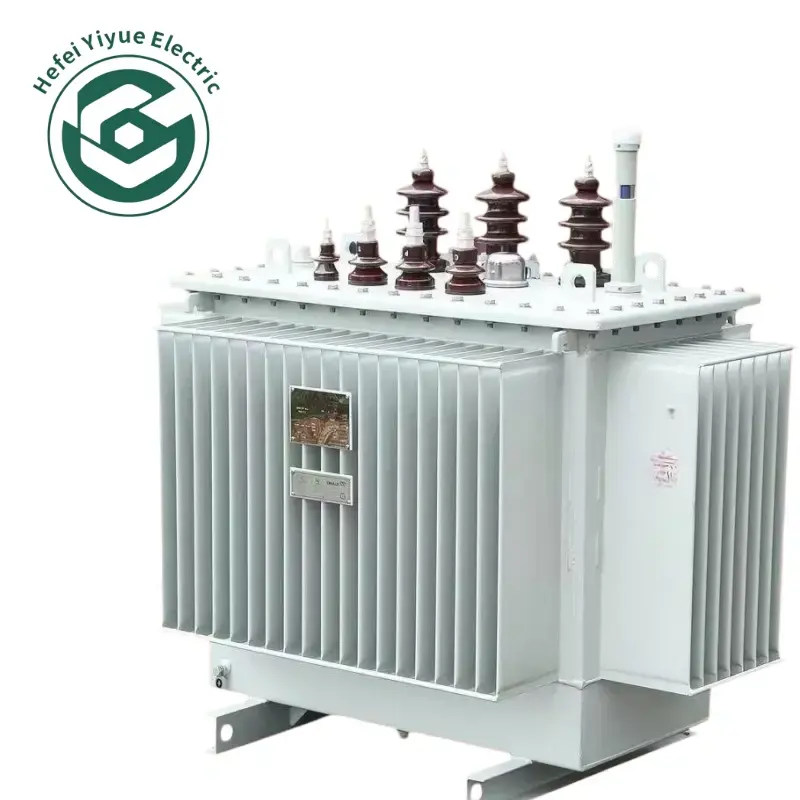
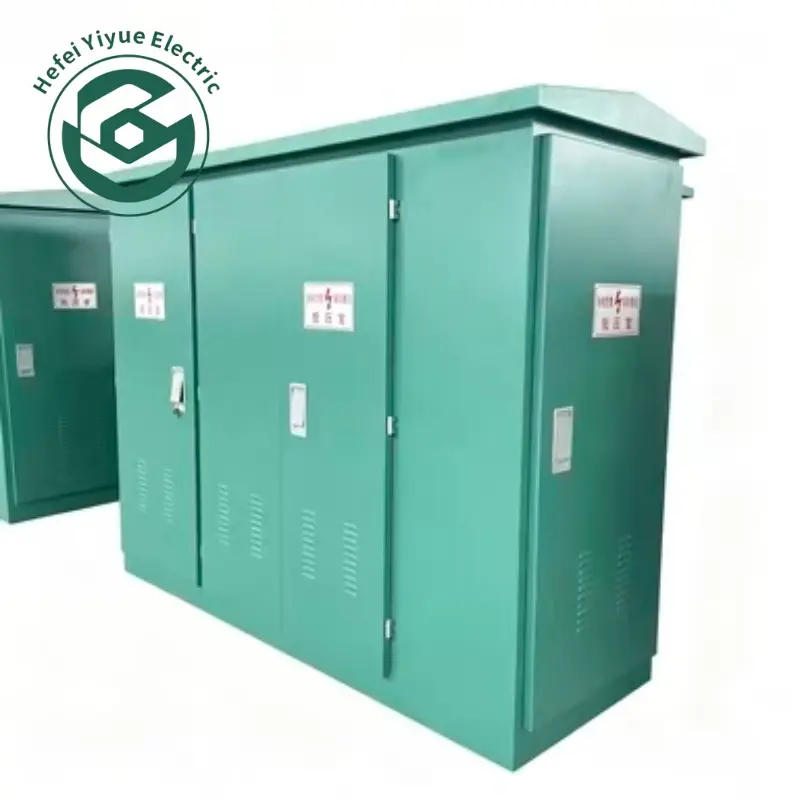
American-style units typically feature a compact, integrated layout. The 800kVA anti-corrosion American pad-mounted transformer, for example, uses a fully sealed oil-immersed structure and a cabinet designed for outdoor exposure. Its corrosion-resistant treatment makes it relevant to projects in humid or coastal environments, where moisture and salt exposure can increase maintenance demands.
The 1000kVA low-loss American pad-mounted transformer also uses an integrated oil-immersed design. Its compact structure helps reduce installation space, while built-in protection functions address several common electrical operating risks. These features are relevant to commercial and municipal distribution projects that require an integrated outdoor power supply unit.
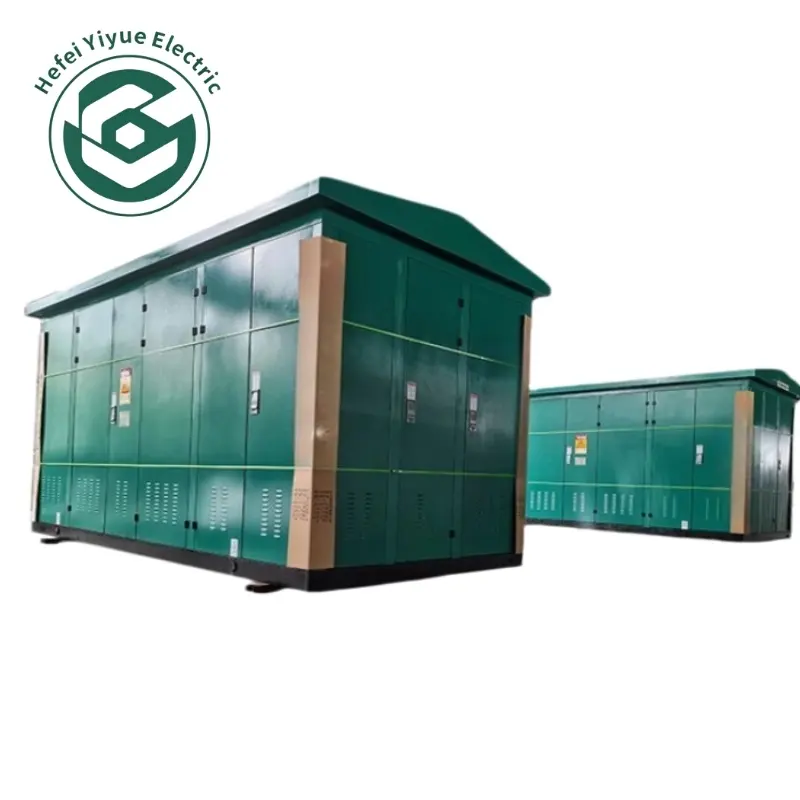
European-style substations place greater emphasis on separating the high-voltage equipment, transformer, and low-voltage distribution sections. The 630kVA European box substation uses three separate compartments and a live-door interlock structure. This arrangement helps prevent access to protected compartments while the equipment remains energized.
The 1600kVA European-type outdoor distribution substation also uses a three-compartment design. It integrates a medium-voltage cabinet, an oil-immersed transformer, and a low-voltage panel into one outdoor unit. The separation of functional sections supports organized equipment arrangement and maintenance access.
Neither design is universally better. The appropriate configuration depends on the project’s available space, equipment layout, operating conditions, and maintenance requirements.
2. Capacity and Voltage Configuration Must Match Project Requirements
Capacity and voltage configuration are fundamental considerations when assessing prefabricated substation performance. A unit must match the electrical requirements of the distribution network it serves, rather than being selected solely because of its physical size or nominal capacity.
The six products considered here cover several capacity and voltage combinations:
- The 315kVA European package substation is designed for a 12kV high-voltage side and a 0.4kV low-voltage side. Its compact prefabricated structure makes it relevant to urban construction and distribution projects.
- The 630kVA European box substation has a 10kV primary voltage, with customization available. Its secondary voltage is 0.4kV, with 0.23kV available as an option.
- The 800kVA American pad-mounted transformer supports a 10kV primary voltage, with 6kV and 11kV options available for customization. Its secondary voltage is 0.4kV, with single-phase 0.23kV available as an option.
- The 1000kVA low-loss American pad-mounted transformer supports 10kV or 11kV primary voltage and 0.4kV or 0.23kV secondary voltage, subject to configuration.
- The 1600kVA European-type outdoor distribution substation uses a Dyn11 vector group and supports 50Hz or 60Hz operation.
- The durable American outdoor prefabricated substation lists rated-voltage options of 10kV and 20kV, with 50Hz or 60Hz frequency options. Its rated capacity has not been specified in the available product information.
These configurations illustrate why project requirements should be confirmed before equipment is ordered. Rated capacity, primary voltage, secondary voltage, frequency, and the distribution system’s operating conditions all need to be considered together. Customization can help accommodate different grid requirements, but the final configuration should be confirmed against the project’s electrical design.
3. Enclosure Design and Environmental Protection
Outdoor equipment must withstand environmental exposure while protecting its internal electrical components. Rain, dust, moisture, corrosion, and temperature variation can affect enclosure condition and maintenance requirements over time.
The 800kVA American pad-mounted transformer is designed with a fully sealed oil-immersed structure and a corrosion-resistant cabinet. Its protection configuration includes overload, short-circuit, over-temperature, pressure-relief, and lightning-surge protection. These features are particularly relevant to outdoor installations where environmental exposure and electrical disturbances must both be considered.
The durable American outdoor prefabricated substation offers IP33 or IP44 enclosure options. It uses an outdoor enclosure designed for weather resistance, with ONAN cooling and Class A or Class H insulation options listed in its specifications. The appropriate enclosure and insulation configuration should be confirmed according to the intended operating conditions.
The 315kVA European package substation has an IP34 standard protection grade, with IP54 available as an option. Its enclosure can be made from cold-rolled steel or aluminum alloy, with electrostatic anti-corrosion powder coating. The listed ambient temperature range is -25°C to +40°C.
For the 1600kVA European-type unit, the specified enclosure protection grade is IP34. It uses natural ventilation, so no additional cooling fans are required under its specified design conditions.
These examples show that enclosure protection should be evaluated according to the actual installation environment. A higher protection grade may be useful in some locations, but the enclosure rating alone does not establish suitability for every outdoor condition. Material, sealing, cooling arrangements, ambient temperature, and maintenance access also matter.
4. Built-In Protection and Safe Equipment Arrangement
Protection functions help reduce the risk of damage caused by abnormal electrical conditions. Their value depends on whether the selected equipment’s protection configuration matches the operating requirements of the installation.
The 1000kVA low-loss American pad-mounted transformer includes overload, short-circuit, over-temperature, pressure-relief, and lightning-surge protection. These functions address different operating risks and should be considered as part of the overall distribution system design.
The 800kVA American unit offers a similar range of built-in protection functions. Its sealed structure and corrosion-resistant cabinet provide additional design considerations for outdoor applications, particularly where the equipment may be exposed to moisture and airborne contaminants.
For European-style substations, physical separation and access control are also important. The 630kVA model’s three-compartment structure and live-door interlock help maintain separation between functional areas and restrict access under energized conditions. The 1600kVA unit also uses separate compartments for its high-voltage, transformer, and low-voltage sections.
Protection devices and compartment layouts serve different purposes. Electrical protection responds to specified abnormal conditions, while structural separation helps organize equipment and control access. Neither replaces correct installation, commissioning, grounding, and routine inspection.
5. Installation Efficiency and Application Flexibility
Factory assembly can simplify the deployment of outdoor distribution equipment. Instead of arranging all major components separately on site, a prefabricated unit brings key equipment together in a prepared enclosure.
The 315kVA European package substation is supplied with factory preassembly, wiring, and functional testing. Its design aims to reduce on-site installation work, with cable connections and commissioning still required according to the project conditions. The product information indicates that commissioning may be completed within one to two days, although the actual schedule depends on site readiness and project requirements.
The 1600kVA European-type unit integrates the medium-voltage cabinet, transformer, and low-voltage panel into a single installation. This arrangement can help simplify equipment layout at locations where space is limited.
American-style units also offer compact integration. The 800kVA and 1000kVA pad-mounted transformers combine their transformer and protective enclosure arrangements in outdoor-ready designs. Such configurations can be suitable for commercial facilities, municipal distribution networks, and other projects that need a compact power supply solution.
When assessing an outdoor box substation, project teams should consider more than the delivery dimensions. Access for transport and lifting, cable entry, foundation preparation, electrical clearances, ventilation, and future maintenance must also be addressed. Factory prefabrication can reduce some site work, but it does not eliminate the need for proper engineering and installation.
6. Matching Substation Design to the Application
Different projects place different priorities on capacity, space, environmental resistance, and maintenance access. Comparing these requirements helps narrow down the available configurations.
For urban construction and compact distribution sites, the 315kVA European package substation offers a defined 12kV/0.4kV configuration and a factory-preassembled structure. For projects requiring a higher capacity, the 630kVA and 1600kVA European-style units provide alternative configurations with separated equipment compartments.
For commercial and municipal projects where an integrated American-style design is preferred, the 800kVA and 1000kVA pad-mounted transformers provide oil-immersed solutions with built-in protection functions. The 800kVA model places particular emphasis on corrosion resistance, while the 1000kVA model highlights low-loss construction. These are distinct product characteristics and should be assessed against the project’s priorities.
The durable American outdoor prefabricated substation provides additional voltage and enclosure options, including 10kV or 20kV rated voltage and IP33 or IP44 enclosure protection. Its final suitability depends on confirming the required capacity and other electrical parameters, which are not fully specified in the available product details.
Comparing these options on a consistent basis makes it easier to identify a suitable design without assuming that one configuration fits every application.
Conclusion
Different prefabricated substation designs address outdoor power distribution needs through their structural layout, electrical configuration, enclosure protection, and built-in safety features. American-style units emphasize compact integration, while European-style designs can provide clearly separated functional compartments. Capacity, voltage, environmental conditions, and maintenance requirements determine which configuration is appropriate for a particular project.
Hefei Yiyue Electrical Equipment Trading Co., Ltd. provides electrical equipment and OEM/ODM customization for requirements such as voltage, specifications, and cabinet dimensions. By confirming these details against the project’s grid standards and installation conditions, buyers can evaluate suitable outdoor prefabricated substations and develop a distribution solution that meets their technical requirements.
Frequently Asked Questions
1. What is the difference between American and European prefabricated substations?
American-style substations generally feature a compact, integrated structure, while European-style substations often use separate compartments for high-voltage equipment, the transformer, and low-voltage distribution equipment. The appropriate design depends on installation space, maintenance requirements, and project specifications.
2. What capacities are available for the prefabricated substations discussed in this article?
The provided product information covers 315kVA, 630kVA, 800kVA, 1000kVA, and 1600kVA models. The durable American outdoor prefabricated substation has no confirmed rated capacity in the available specifications, so its capacity should be verified separately.
3. What voltage configurations can outdoor prefabricated substations support?
Voltage configurations vary by model. For example, the 315kVA European package substation uses a 12kV high-voltage side and a 0.4kV low-voltage side. Other models offer different voltage options, including customizable primary and secondary voltages to meet project requirements.
4. What protection features should be considered when selecting an outdoor box substation?
Important considerations include overload protection, short-circuit protection, over-temperature protection, pressure relief, lightning-surge protection, and enclosure protection. The required configuration depends on the equipment model, electrical system, and installation environment.
5. Can prefabricated substations be customized for different projects?
Yes. Customization may include voltage configuration, equipment specifications, cabinet dimensions, enclosure materials, and selected protection or monitoring options. Buyers should confirm the required configuration, applicable grid standards, and installation conditions with the supplier before ordering.